The Architecture of Isolation: The Unseen Siege of Sweida
While the world focuses on macroscopic political shifts in Syria, the Druze minority in Sweida faces a devastating, state-sponsored siege. Read the policy data on this unfolding humanitarian crisis and see how the Suwayda American Society is bypassing blockades to deliver direct aid.
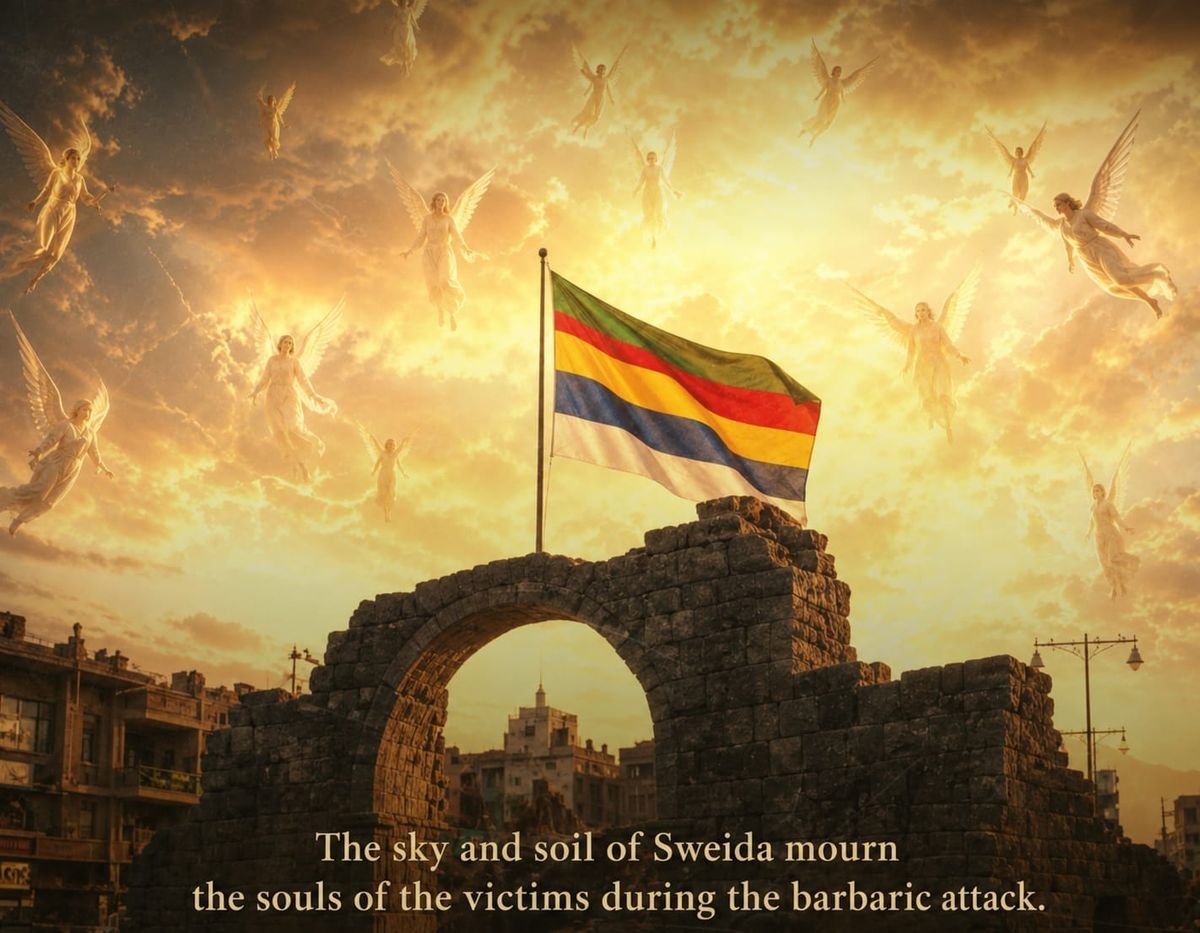
There is a distinct form of warfare and structural crisis that does not always register on standard satellite imagery or capture the immediate attention of international breaking news. It is the slow, calculating reality of isolation. It is the deliberate or environmental cutting of vital societal arteries—highways, supply lines, and infrastructure corridors—that leaves entire populations struggling for fundamental survival.
Right now, this devastating reality is playing out across two drastically different global landscapes: the blockaded Sweida (Al-Suwayda) governorate in southern Syria, and the disaster-impacted communities of Japan's Noto Peninsula.
To bridge the gap between policy documentation and immediate human security, JFPA Action has expanded its vital relief pipelines, connecting independent ground documentation with direct grassroots aid.
Part I: The Mechanics of the Suwayda Siege
What is unfolding in Sweida cannot be dismissed as a minor regional dispute. Independent documentation, including investigations by the UN Independent International Commission of Inquiry on Syria, reveals a deeply organized pattern of collective punishment and ethno-religious targeting affecting the Druze minority.
The dimensions of this structural strangulation are multifaceted:
- The Strangulation of Movement: The primary Damascus–Sweida highway and critical regional transit routes are subjected to enforced blockades and highly militarized checkpoints. These points cut off the province from vital commercial goods, fuel, and daily necessities.
- The Scorched-Earth Cost: Coordinated offensives involving state-affiliated forces have left a trail of deep devastation. More than 30 villages have faced systematic looting, widespread property destruction, and the deliberate burning of ancestral homes and agricultural lands.
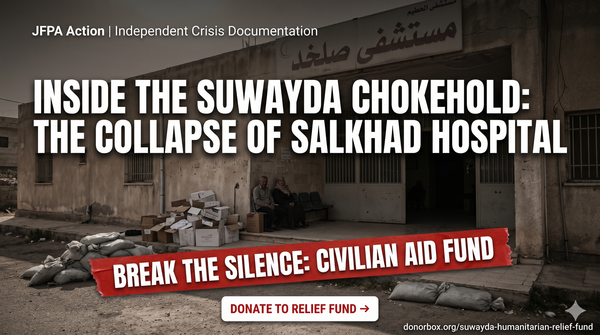
- Humanitarian Toll: The violence and subsequent blockades have resulted in over 1,700 documented casualties and triggered the internal displacement of nearly 200,000 civilians. Local clinics face severe depletion of critical medications, and hospitals like Salkhad have been forced to suspend operations entirely due to catastrophic fuel shortages.
Part II: The Dual Front—Environmental and Economic Crises in Japan
True global solidarity requires tracking human suffering wherever structural failure or disaster isolates the vulnerable. In parallel to geopolitical blockades, acute regional crises are testing survival boundaries elsewhere:
- The Noto Peninsula Displacement: Following devastating environmental disasters, including the severe Noto Peninsula earthquake (能登半島地震), thousands of displaced civilians remain stranded without stable regional infrastructure, facing prolonged displacement and winterization challenges.
- The Escalation of Food Insecurity: Simultaneously, intense economic strain and severe inflation have triggered an unprecedented spike in food insecurity across vulnerable local enclaves in Japan. This has placed an exhausting, unsustainable burden on regional community support networks and local food banks.
Formal, bureaucratic international NGOs are frequently unable to maneuver past political blockades or react agilely to localized disaster pockets. When institutional pathways are paralyzed by friction or administrative bottlenecks, the burden of human security falls entirely on agile, direct civil society mechanisms.
Part III: Mobilizing Direct Support via JFPA Action
To counter this institutional aid vacuum, JFPA Action has established a unified, secure crowdfunding terminal on Donorbox atdonorbox.org/jfpa-crisis-relief.
This platform operates as a direct pipeline to bypass compromised institutional channels, deploying resources through a verified US-registered 501(c)(3) nonprofit partner directly to trusted, independent local networks on the ground. All contributions directly fund:
- Emergency Medical & Civilian Relief: Procurement of vital trauma medicines, emergency generator fuel for isolated clinics in Suwayda, and the urgent distribution of food, clean water, and daily necessities to food banks in Japan and families displaced by the Noto Peninsula earthquake.
- Independent Field Documentation: Sustaining JFPA Action’s independent, uncompromised investigative tracking and open-source documentation of infrastructure and human rights metrics free from external or regional censorship.
Silence only deepens isolation. We call on researchers, policy observers, and global citizens to break the narrative blockade. Read the data, share this brief, and support the relief pipeline.
Support the JFPA Crisis Relief Fund Today →